Tutorials
WGS (high depth)
This part will deal with processing of whole genome sequencing data (WGS) of medium-to-high sequencing depth. Here, I’m referring to >6X genome-wide average sequencing depth, which allows for reliably calling heterozygous sites following this pipeline.
This section will use data from Bengal tigers from Khan et al. (2021). Note that the data are downsampled, so these steps can be run quickly, for educational purposes only. Here, we kind of pretend that we have high depth data, while the downsampled data set actually has more resemblance to a low depth data set.
You can find the steps for quality control, trimming and mapping here.
Steps for variant calling and filtering are here.
Note that there are exercises with additional information here.
📷 Tiger in Chitwan National Park, Nepal
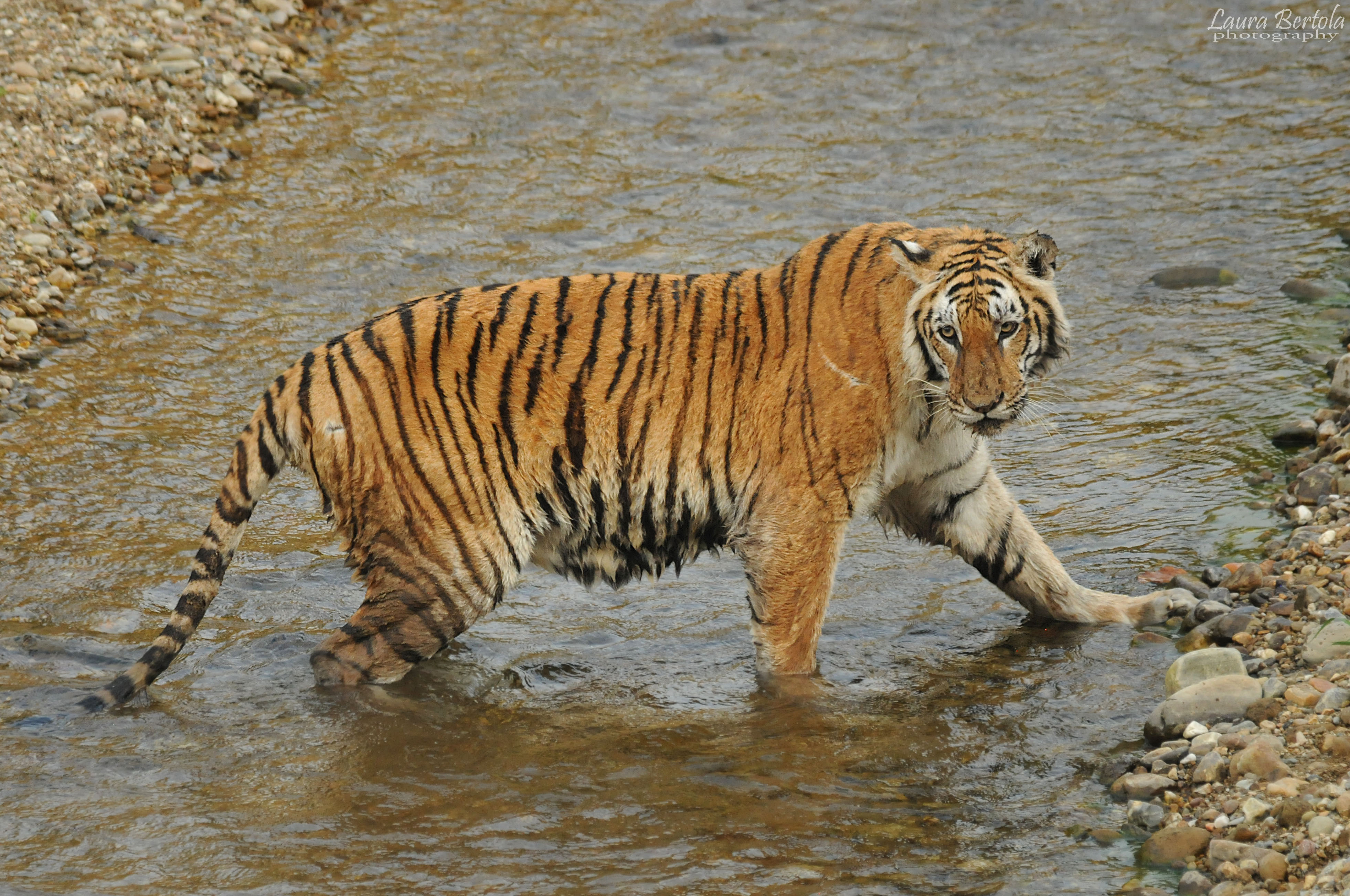 ©Laura Bertola